South Carolina HSA Tax Rules: A New Two-Rate System for 2026
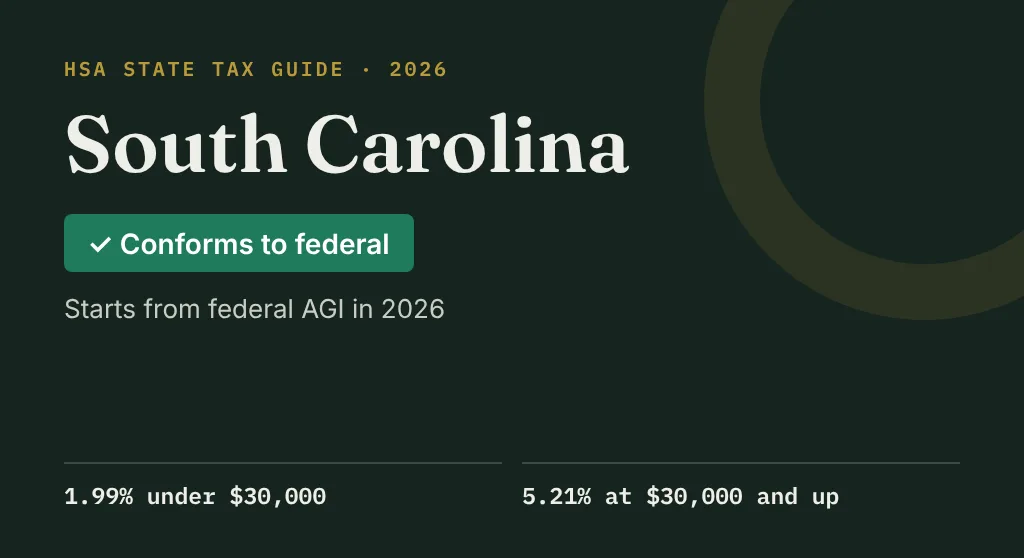
South Carolina rewrote its income tax for 2026. The new system starts from federal adjusted gross income, and that is good news for HSAs: the contribution is already out of the number before the state ever touches it.
Key takeaways
- South Carolina now starts from federal AGI, which already excludes HSA contributions. Growth and qualified withdrawals stay untaxed too.
- For 2026, income under $30,000 is taxed at 1.99% and income of $30,000 and above at 5.21%.
- South Carolina ties itself to the federal tax code as of a fixed date (now December 31, 2024), so new federal HSA changes can take time to apply here.
Why HSA contributions stay untaxed
The HSA deduction is taken "above the line" on your federal return, which means it's subtracted before adjusted gross income is calculated. Payroll contributions never show up in your wages at all. Since the South Carolina Department of Revenue says federal AGI "is now the starting point" for the state return, the HSA break flows straight through with no extra line to fill in.
Investment growth inside the account isn't reported federally, so the state never sees it. Withdrawals for qualified medical expenses are excluded federally and stay excluded here.
The new 2026 rates
H.4216, signed March 30, 2026, applies starting with the 2026 tax year (returns due April 15, 2027). It sets two rates: 1.99% on income under $30,000 and 5.21% on income of $30,000 and above. The top rate drops further in years when state economists project revenue growth of 5% or more.
For most full-time workers the 5.21% rate is the one that matters, so a $4,400 self-only contribution saves roughly $229 in state tax and an $8,750 family contribution about $456, on top of federal savings.
The conformity date catch
South Carolina doesn't adopt every federal change the day it happens. Its Department of Revenue says the state conforms to the Internal Revenue Code "as amended through December 31, 2024," and that it hadn't yet taken up the 2025 federal tax law. The core HSA rules are decades old, so they're fully covered. But if Congress changes who can have an HSA or what it can pay for, South Carolina may lag until lawmakers move the date. North Carolina works the same way.
Quick answers
Does South Carolina tax HSA contributions?
No. South Carolina starts its income tax from federal adjusted gross income, which already excludes HSA contributions, so they stay untaxed at the state level.
What are South Carolina's income tax rates for 2026?
Under H.4216, signed March 30, 2026, income under $30,000 is taxed at 1.99% and income of $30,000 and above at 5.21%. The top rate can fall further if state revenue growth meets a set target.
Does South Carolina automatically adopt new federal HSA rules?
Not automatically. South Carolina conforms to the Internal Revenue Code as of a fixed date, currently December 31, 2024. Long-standing HSA rules are covered, but brand-new federal changes need the legislature to update that date.
Sources: South Carolina DOR, information about H.4216; SCDOR Information Letter #26-4 (IRC conformity); IRS Publication 969 for federal HSA treatment.
Your next step
Learn what applies to you, run your own numbers, then act on it.